
It is an undeniable fact that all radar systems employ the same science of “real world” physics, and each type of radar must be optimized for its particular application. Microwave radar provides line-of-sight, near-field monitoring with superior range resolution. However, microwave radar is limited to that same line-of-sight and cannot “see” beyond the horizon. In order for a radar system to reliably detect targets beyond the horizon and at greater distances, High Frequency (HF) radar designs trade off range resolution for broader, reliable and increased coverage and employ many technologies (i.e., pulse compression) to do so.
Maerospace provides PASE™, an accurate High Frequency Surface Wave Radar (HFSWR) based on current technological advances. The following paper outlines the context of radar resolution and the design innovations we use to ensure our products exceed competitive HFSWR systems.
An HFSWR operates in the frequency range between 3 and 20 MHz, utilizing the surface-wave mode of propagation. Surface waves have the following characteristics:
(a) surface waves attenuate directly as functions of distance (range), frequency and surface roughness;
(b) surface waves propagate efficiently in vertical polarization only; and
(c) surface waves require a conducting surface to propagate.
Consequently, the signal will be weaker if the radar frequency is increased, or for a given frequency the sea state increases. For long range surveillance of the 200 nm EEZ the only practical frequency is below 5 MHz.
The PASE™ HFSWR uses pulse compression to emit a coherent pulse train where the phase of the signal is precisely controlled from pulse to pulse. The echoes from all the objects within the area illuminated by the radar are received by a linear array of antennas and digitally processed to enhance the signal-to-interference ratio. The echoes are then compared against a detection threshold chosen to achieve a certain value of constant-false-alarm-rate (CFAR). If the magnitude of an echo exceeds the threshold it is declared a detection. A tracking algorithm is used to associate successive detections to form a track.
The detection performance of an HFSWR is dependent on many factors, some of which are beyond the control of any electronics such as sea state. Radar performance is measured primarily by its ability to detect and track targets at long ranges and its ability to resolve targets that are in close proximity of one another.
Radar resolution is the ability to resolve two objects in close proximity of each other. While any one parameter may be constrained by real world physics, by using multiple parameters concurrently we achieve the highest range resolution possible for the extended coverage distance. For HFSWR, a target is an object in the three-dimensional space of (a) range, (b) velocity and (c) bearing. A higher resolution means a better capability to resolve two targets that are close to each other in the dimension under consideration.
(a) Range resolution:
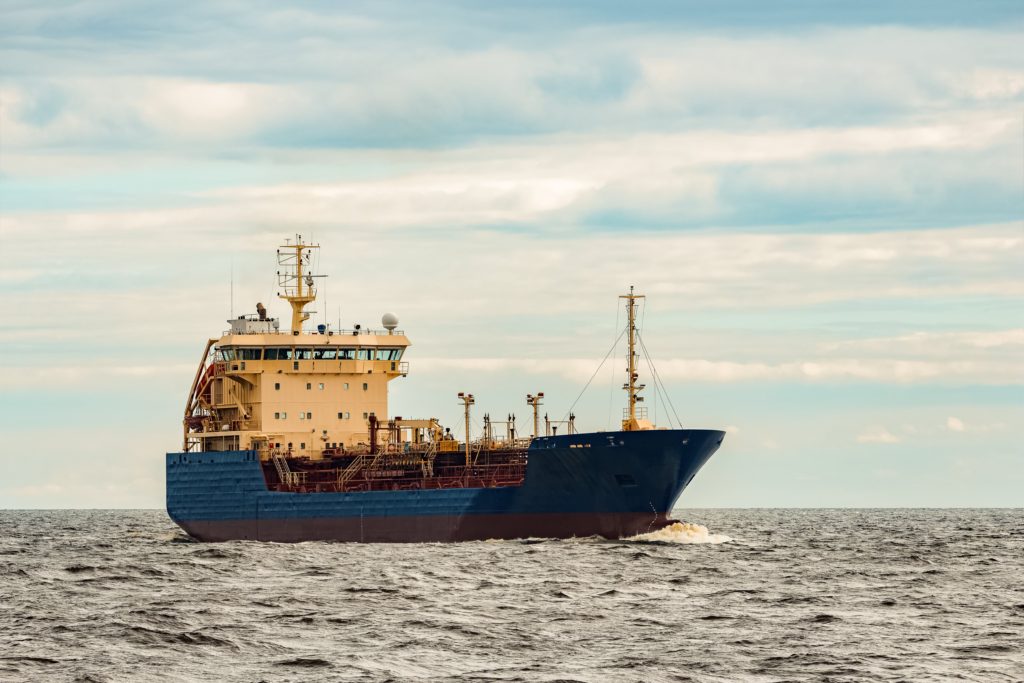
The range resolution of a radar is directly related to the bandwidth of its transmitted waveform. For any HFSWR employing pulse compression and a 30 kHz waveform, the range resolution will be approximately 6 km. In other words, two ships with the same radial velocity and bearing, cannot be resolved by an HFSWR if they are within 6 km of one another in range. This range resolution can be slightly lower but would require an increase in transmitted bandwidth which may not be acceptable to local governmental RF licensing authorities.
(b) Velocity resolution
The velocity resolution of a radar is directly proportional to the coherent integration time. Typically for an HFSWR with a 240-second coherent integration time, the velocity resolution is about 0.5 m/s or 1 knot.
(c) Bearing resolution

The bearing resolution of a radar is directly proportional to the aperture size of the antenna. The aperture is measured in terms of the radar’s wavelength. For an antenna array with element separation of half a wavelength, a 16-element antenna array would yield a beamwidth of about 10 degrees. Using a second transmit array with appropriate phase offsets effectively doubles the aperture thus reducing the beamwidth to 5 degrees. This translates to a cross range of 17 nm at a distance of 200 nm. Further gain in bearing resolution can be realized by increasing the number of receive elements and the physical span of the array.
Despite the moderate resolution capabilities of HFSWR, in practice it is not an issue because there is an extremely low probability of having two targets in close proximity of each other in all three dimensions. Two targets can be resolved if they are separable in at least one of these three dimensions. A Virtual Aperture Antenna (VAA) configuration can improve target separation as well.
Another performance indicator of a radar is the accuracy of the estimate of target range, bearing and velocity. Although the resolution capabilities of the HFSWR are moderate, under a single-target scenario (i.e., only one target is in a range bin, at a given bearing), an estimate accuracy equal to one tenth of the basic resolution can be achieved with a moderate signal-to-noise ratio. For example, if the range resolution of the radar is 6 km, the target position in range is typically within 600 m of the true location if no other targets are nearby. If the Azimuth resolution is 5 degrees, the target position in azimuth is typically within 0.5 degree.
In the same way that coastal microwave radar becomes unreliable at distances beyond the horizon, HFSWR operations are also impacted beyond its recommended coverage distance. Prudent, consistent and reliable operational awareness requires that each maritime system be used for its optimized application to ensure target recognition, situational understanding and coordinated interdiction efforts: Coastal microwave systems should be used up to 20NM after which their signals and their range begin to become less reliably predictable, HFSWR systems be employed from 20NM to 200NM where their signals and range begin to fade. Maerospace also provides long range Satellite-AIS (S-AIS) based predictive analytics for early target detection and identification for maritime domain awareness beyond 200NM. Skywave OTHR systems can be employed for even greater distances beyond HFSWR. A layered technology approach is required and delivers the most complete real-time maritime intelligence enabling rapid decision-making and accurate deployments for interdiction thus protecting a country’s sovereignty against multiple maritime threats.